Sunna Valdís turns 20
4 minutes reading

On 9 February, Sunna Valdís turned 20, a milestone that once seemed impossible.
As the only person in Iceland living with Alternating Hemiplegia of Childhood (AHC), Sunna’s early prognosis was filled with uncertainty and fear. At the time of her diagnosis, it was even believed she might not live past the age of seven.
However, Sunna’s story — and the tireless advocacy of her family — has redefined what it means to live with a rare neurological disorder. From founding international organisations to inspiring the documentary Human Timebombs, their work has transformed AHC from a poorly understood condition into a focal point for cutting-edge gene therapy and global research.
Sunna has become a global symbol of resilience. Her journey proves that while a diagnosis may be rare, the strength of a community is limitless.
Read the full tribute by her father, Sigurður Hólmar Jóhannesson, below.
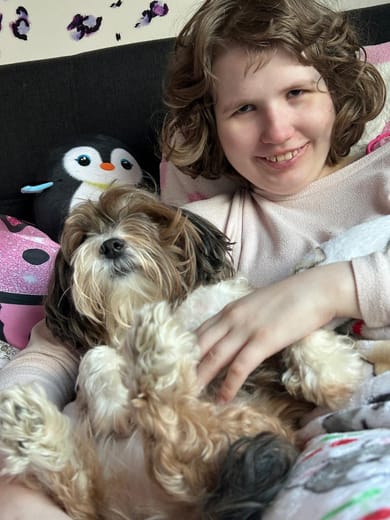
Sunna Valdís is celebrating her 20th birthday today. She is the only person in Iceland living with Alternating Hemiplegia of Childhood (AHC), a complex and rare neurological disorder that affects every aspect of her life, every day of the year.
When she was diagnosed as a child, the prognosis was poor, but her story — and that of her family — is a powerful example of perseverance, education, and hope, with a profound impact both in Iceland and around the world.
When Sunna was diagnosed with AHC, there were very few answers and little information available to shed light on what her future might hold.
Her future was painted in dark colours, and it was believed that her life expectancy was not good and that she would likely not live beyond the age of 6 or 7. The disease was poorly researched and understood, and her family faced enormous uncertainty. No one knew how Sunna’s life would develop, or even if she would even reach adulthood.
AHC is often referred to as the world’s most complex neurological disorder, as its symptoms resemble those of many other neurological diseases.
No two patients are alike, and the condition evolves with age: some experience improved quality of life over time, while others a worsening of their symptoms.
As well as facing physical and emotional struggles, families also have to deal with a lack of knowledge, support and available resources.
Rather than accepting hopelessness, Sunna’s family decided to contribute to changing the situation. They began sharing knowledge and telling Sunna’s story — not only her personal story, but also that of a disease that was largely unknown. They created educational materials, including videos, documentaries, illustrated books, interviews, podcasts, and articles.
The family gave lectures to professionals and organisations in Iceland and abroad with the aim of raising awareness of the disease and ensuring it receives the attention it deserves.
Organisations were founded both nationally and internationally to unite parents in their fight against this complex neurological disorder.
This extensive work has borne fruit. With increased education and more open discussion, more parents have found one another, and many have joined the fight in their own ways. Doctors have gained a better understanding of the disease, and scientists have shown a growing interest in it.
Sunna Valdís has had a profound impact on how the world views AHC. Her existence, struggles, and life story have become part of a wider movement representing hope, knowledge and change.
Today, numerous research projects are underway simultaneously around the world. Existing medications are being re-examined with the aim of improving patients’ quality of life, and ambitious gene therapies are being developed – treatments that were once unthinkable.
AHC research does not stand alone; it also sheds new light on fundamental nervous system processes. It increases our understanding of other neurological disorders and generates knowledge that will benefit far more people than those living with AHC. AHC patients and their families are therefore fighting for a cause that reaches far beyond their own group.
Albeit unintentionally, Sunna Valdís has had a profound impact on how the world views AHC. Her existence, struggles, and life story have become part of a wider movement representing hope, knowledge and change. She has demonstrated that statistics and predictions do not tell the whole story and that one person can influence the world simply by being themselves and refusing to give up. Although there is still no treatment that can stop AHC attacks, we are closer to finding a cure than ever before, thanks to this growing awareness.
Now that Sunna has turned 20, she is a symbol of hope, strength and resilience.
Her story reminds us that life is unpredictable, that nothing is impossible, and that one family’s struggle can transform how a rare disease is perceived – not only in Iceland, around the world.
Sigurður Hólmar Jóhannesson
February 9, 2026